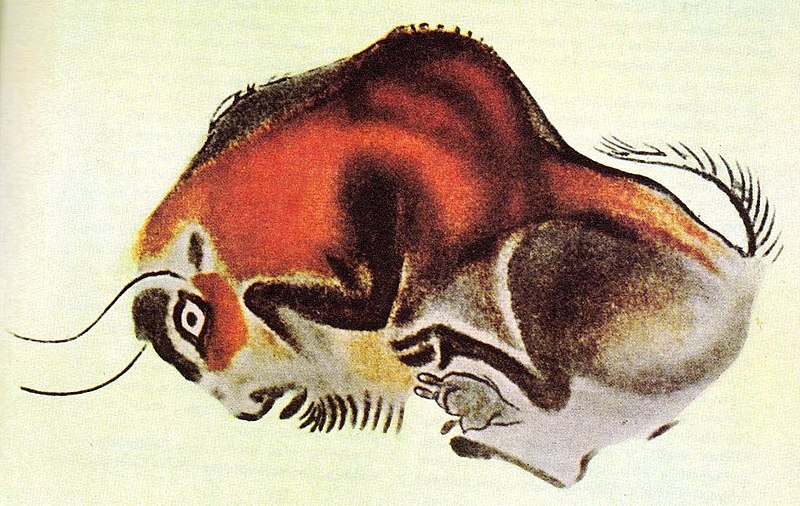
Hidden in the green hills of Cantabria near the town of Santillana del Mar, the Cave of Altamira contains some of the most significant prehistoric art ever found. Its polychrome ceiling, painted between 36,000 and 13,000 years ago, features vivid depictions of bison, horses, deer, and handprints that stunned the scientific community when their authenticity was finally accepted in 1902. Designated a UNESCO World Heritage Site, Altamira remains a cornerstone in our understanding of early human creativity and cognitive development.
Discovery and Controversy
The story of Altamira's discovery reads almost like a detective novel. In 1868, a local hunter named Modesto Cubillas stumbled upon the cave entrance while pursuing his dog through the undergrowth. He mentioned the find to Marcelino Sanz de Sautuola, a local nobleman and amateur archaeologist, who initially paid it little attention.
It was not until 1879, during a return visit with his eight-year-old daughter Maria, that the paintings were noticed. As the story goes, Maria looked up at the cave ceiling and exclaimed at the painted animals above her. Sautuola immediately recognized the significance of what his daughter had found and began studying the images in earnest.
When Sautuola published his findings in 1880, claiming the paintings were prehistoric in origin, the academic establishment reacted with skepticism and hostility. Leading French prehistorian Emile Cartailhac accused Sautuola of forgery, suggesting the paintings were too sophisticated to be the work of prehistoric humans. This rejection deeply affected Sautuola, who died in 1888 without seeing his discovery vindicated.
It was not until 1902, after similar paintings were found in other French caves, that Cartailhac publicly recanted his position in a famous article titled "Mea culpa d'un sceptique." By then, Sautuola had been dead for fourteen years.
The Paintings of Altamira
The most celebrated feature of Altamira is the Great Ceiling (Gran Techo) in the main chamber, which spans approximately 18 meters in length. This remarkable surface is covered with around 30 large animal figures, predominantly bison, along with horses, deer, wild boar, and abstract symbols.
What makes the Altamira paintings extraordinary is the technical sophistication of their execution. The artists used the natural contours and bulges in the rock surface to give their figures a three-dimensional quality, creating an effect of volume and movement that anticipates artistic techniques not seen again until the Renaissance.
The pigments used include iron oxide (for reds and yellows), manganese dioxide (for blacks), and charcoal. These were applied using a variety of methods: fingers, rudimentary brushes made from animal hair, and spray techniques where pigment was blown through hollow bones to create subtle gradations of color.
Beyond the Great Ceiling, the cave contains art throughout its 270-meter length. The deeper galleries feature engravings, hand stencils (both positive and negative), and numerous abstract signs whose meaning continues to be debated by researchers.
Recent analysis has revealed that the art was not created in a single period but accumulated over roughly 20,000 years, from the Aurignacian period (around 36,000 years ago) through the Magdalenian (approximately 13,000 years ago). This makes Altamira one of the longest continuously used artistic sites in human history.
Scientific Significance
Altamira occupies a unique position in the study of prehistoric art and human cognitive evolution. The technical mastery displayed in the paintings challenges simplistic notions about the intellectual capabilities of our distant ancestors.
The use of polychrome techniques, the exploitation of natural rock surfaces for three-dimensional effect, the careful observation of animal anatomy, and the planning required to execute large-scale compositions all point to artists with sophisticated cognitive abilities, keen observational skills, and a developed aesthetic sense.
Researchers from institutions including the Spanish National Research Council (CSIC) continue to study Altamira using modern analytical techniques. Non-invasive methods such as 3D scanning, spectral analysis, and environmental monitoring provide new insights without risking damage to the irreplaceable artwork.
The cave is also significant for understanding the environmental conditions of the Upper Paleolithic. Analysis of sediment layers, pollen deposits, and animal bones found within the cave has contributed to reconstructions of the climate and ecology of northern Spain during the last Ice Age.
The Museum of Altamira and the Neocave
Due to conservation concerns, access to the original cave has been severely restricted since 1977 and has been largely closed to the public since 2002. The influx of visitors in the mid-20th century caused significant environmental changes within the cave, including temperature fluctuations, increased CO2 levels, and the growth of algae on the painted surfaces.
In 2001, the Museo Nacional y Centro de Investigacion de Altamira opened adjacent to the cave site. Its centerpiece is the Neocave, a meticulous full-scale replica of the Great Ceiling and other sections of the original cave.
The Neocave was created using 3D scanning of the original surfaces and painstaking reproduction of every crack, bulge, and painted figure. The result is remarkably faithful to the original, allowing visitors to experience the paintings as they appear in the actual cave without any risk to the ancient artwork.
The museum also houses exhibitions on prehistoric life in Cantabria, the geology of the cave, the techniques used by Paleolithic artists, and the history of the cave's discovery and study. Interactive displays make the content accessible to visitors of all ages.
Practical Visitor Information
Getting There
The museum is located 2 km from Santillana del Mar and approximately 30 km west of Santander. By car, take the A-67 motorway and follow signs for Santillana del Mar. Regular bus services connect Santander with Santillana del Mar.
Museum Hours
Open Tuesday to Saturday from 9:30 to 18:00 (until 20:00 in summer). Sundays and holidays from 9:30 to 15:00. Closed on Mondays, January 1, May 1, and December 24-25 and 31. Times may vary seasonally.
Original Cave Access
Limited access to the original cave is occasionally offered through a lottery system. Only five people per week may enter, for a visit of approximately 37 minutes. This is an extremely rare opportunity and should not be relied upon.
Recommended Duration
Allow at least 2-3 hours for the full museum experience, including the Neocave, permanent exhibitions, and temporary displays. Audio guides are available in multiple languages.
Exploring the Cantabria Region
Cantabria is home to numerous other caves with prehistoric art, making it one of the most important regions in the world for studying early human culture. Notable sites include:
- El Castillo Cave: Contains the oldest known cave art in Europe, with red disk paintings dated to at least 40,800 years ago
- Covalanas Cave: Features exceptional red-dotted animal figures in a small, intimate setting
- El Pendo Cave: A large site with art and significant archaeological deposits spanning over 80,000 years
- Santillana del Mar: Often called the prettiest village in Spain, this medieval settlement is a destination in itself, with cobblestone streets and Renaissance-era architecture
The Cantabria regional tourism board provides detailed itineraries for cave tourism routes at turismodecantabria.com.